
Growth is not the result of doing more marketing. It is the result of connecting the right activities in the right order. A growth marketing strategy gives your business a practical system for attracting qualified attention, converting demand, and learning what to improve next. This guide explains how to build that system around your customers, website, search visibility, paid acquisition, content, and measurement.
1. Start With a Business Growth Objective
A campaign objective and a business objective are not the same thing. “Get more traffic” describes an activity; “generate 40 qualified consultations per month at a sustainable acquisition cost” describes an outcome. The second statement gives your team a standard for making decisions.
Choose one primary growth objective for the next planning period, then define the supporting metrics. For a service business, those metrics may include qualified leads, booked calls, lead-to-customer rate, and revenue by channel. For an e-commerce business, they may include conversion rate, average order value, repeat purchase rate, and contribution margin.
- Business outcome: the result the company needs.
- Audience outcome: the problem or decision you help the customer with.
- Marketing outcome: the measurable action that moves the customer forward.
2. Understand the Customer Before Choosing a Channel
The best growth marketing strategies are built around customer intent—not around whichever platform is popular. Map the questions customers ask before they become leads, the objections that slow down a purchase, and the evidence they need before trusting a provider.
Build a simple intent map
Group demand into three stages: people discovering a problem, people comparing solutions, and people ready to take action. Each stage needs a different message. Educational content can create understanding; comparison content can reduce uncertainty; a focused service page or consultation offer can convert high-intent visitors.
This intent map also helps your team avoid a common mistake: sending every audience to the same homepage with the same generic message.

3. Build a Digital Foundation That Can Convert Demand
Your website is where attention becomes a business opportunity. Before increasing ad spend, make sure the site communicates five things quickly: who you help, what problem you solve, why the visitor should trust you, what action they should take, and what happens after they take it.
Prioritize clarity, speed, and conversion
A conversion-ready website should have a clear information hierarchy, strong mobile usability, accessible navigation, fast loading performance, and calls to action that match the visitor’s intent. A landing page for a paid campaign should be even more focused: the page promise should match the ad promise, and unnecessary choices should be removed.
When the website needs a strategic or structural improvement, website design services can keep clarity, usability, performance, and conversion connected—not treated as decoration alone.
4. Use SEO to Capture Existing Demand
SEO is one of the most durable parts of a growth marketing strategy because it helps your business appear when people are already searching for an answer, provider, or solution. Strong SEO is not simply adding keywords to a page. It requires useful topic coverage, technically accessible pages, clear internal linking, strong page experience, and content that satisfies the searcher’s real intent.
Connect SEO to revenue
Prioritize topics that can influence a commercial decision. Create helpful educational articles, then connect them to relevant service pages with descriptive internal links. Monitor not only rankings, but also engaged sessions, assisted conversions, qualified inquiries, and revenue from organic landing pages.
Businesses that want to build durable search visibility can strengthen this foundation through SEO services designed around their growth goals.
5. Connect Paid Advertising, Content, and Remarketing
Paid media can produce useful reach and fast feedback, but it performs best when it is connected to the rest of the customer journey. Use content to answer questions and build trust, search to capture intent, paid campaigns to create or accelerate demand, and remarketing to reconnect with people who were interested but not ready to act.

Make remarketing useful
Do not show every visitor the same repeated ad. Segment audiences by behavior: product or service viewers, high-intent page visitors, form starters, past customers, and people who already converted. Then give each group a relevant next step. A remarketing ads can support this part of the journey with clearer audience and conversion logic.
6. Measure the Metrics That Explain Growth
Impressions, clicks, and traffic are useful diagnostic signals, but they are not the final score. A growth marketing strategy should connect channel activity to the outcomes the business cares about.
| Question | Useful metric | Why it matters |
|---|---|---|
| Are we reaching the right people? | Qualified traffic and engagement | Shows whether the audience and message are aligned. |
| Are visitors taking action? | Conversion rate and lead rate | Reveals whether the experience makes the next step clear. |
| Are leads valuable? | Lead-to-customer rate | Separates activity from commercial quality. |
| Is growth efficient? | Customer acquisition cost and revenue | Helps guide budget and channel decisions. |

Use consistent conversion definitions, clean analytics events, reliable call and form tracking, and a reporting view that stakeholders can understand. If lead response is slow or inconsistent, the marketing system can still leak revenue after the conversion is recorded. That is where connected automation and CRM workflows become important.
7. Turn the Strategy Into a 90-Day Roadmap
A strategy becomes useful when it produces a sequence of actions. Start with the highest-leverage constraint rather than attempting to launch every channel at once.
- Days 1–30: Diagnose and prioritize. Review customer intent, analytics, website friction, search opportunities, advertising data, and follow-up gaps.
- Days 31–60: Build and test. Improve the most important page or offer, publish priority content, launch focused tests, and establish tracking.
- Days 61–90: Learn and scale. Compare qualified outcomes, refine audiences and messages, document what worked, and increase investment only where the evidence supports it.
This sequence keeps the work manageable while creating a feedback loop. The goal is not a perfect plan on day one; it is a better decision every cycle.
Common Growth Marketing Mistakes to Avoid
- Increasing ad spend before fixing a weak landing-page experience.
- Chasing traffic without defining what a qualified conversion means.
- Publishing disconnected content with no internal path to a relevant service.
- Using the same message for discovery, comparison, and purchase intent.
- Reporting platform metrics without connecting them to sales outcomes.
- Ignoring lead follow-up after the form or call conversion.
Frequently Asked Questions
What is a growth marketing strategy?
A growth marketing strategy is a connected plan for attracting the right audience, converting demand, measuring outcomes, and improving the customer journey over time. It combines channels and learning instead of treating each campaign as an isolated project.
How long does a growth marketing strategy take to work?
The timeline depends on the starting point, market, budget, and sales cycle. Paid tests may provide early signals, while SEO and content typically compound over a longer period. A 90-day roadmap creates enough structure to learn without promising unrealistic results.
Should a small business focus on SEO or paid advertising first?
There is no universal answer. If the business needs immediate demand and has a conversion-ready offer, paid testing may provide useful feedback. If customers search actively for the solution, SEO can build durable visibility. In many cases, the strongest approach uses paid insight to support long-term organic priorities.
Build the System Around the Constraint
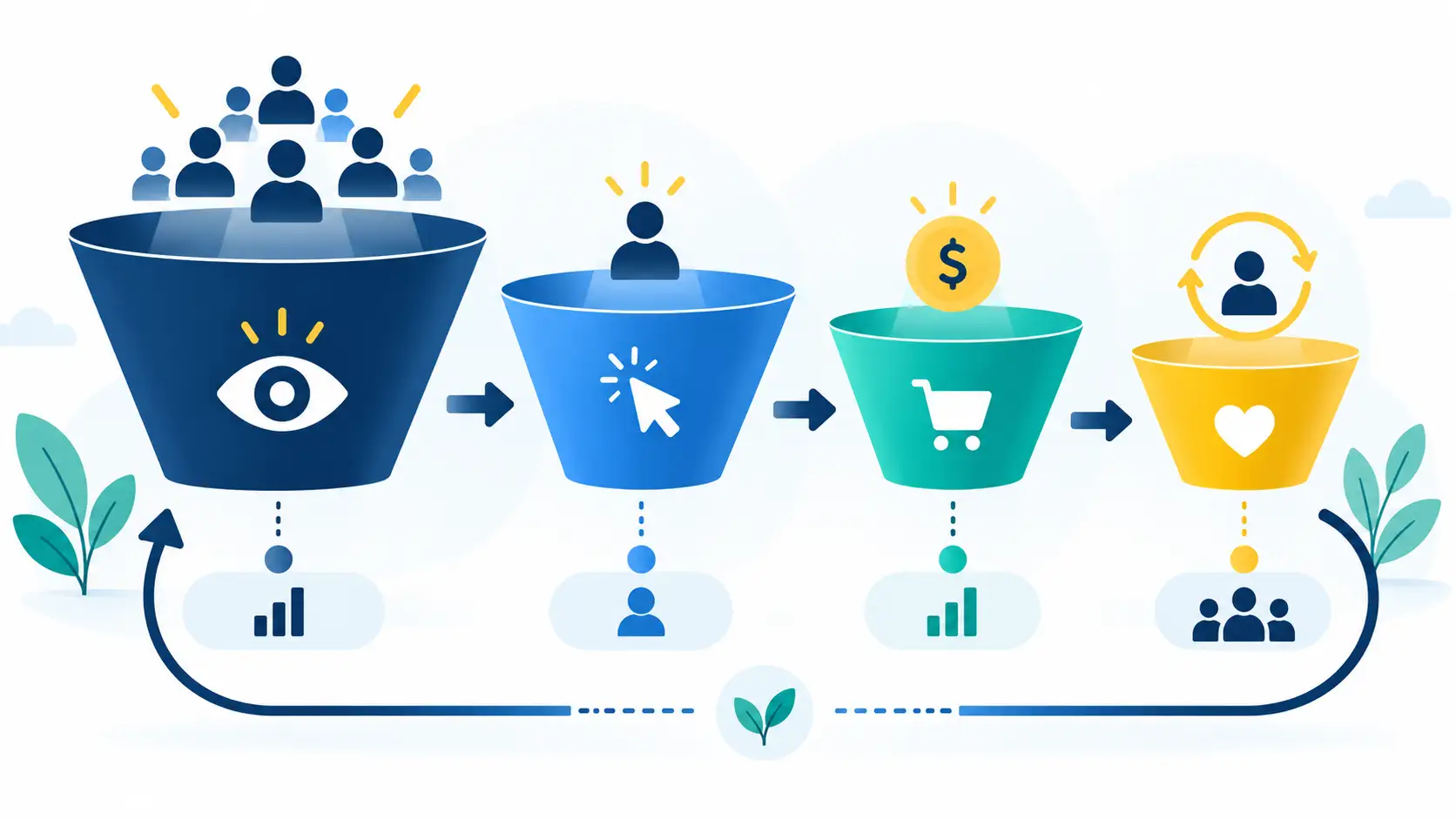
Growth becomes more predictable when marketing is treated as a system: customer insight informs the message, the website makes the value clear, SEO captures intent, paid media expands reach, remarketing brings interested visitors back, and measurement guides the next decision.